What Is an NCV Voltage Tester Pen? A Non-Contact Solution to Common Cable Faults
Apr 10,2025 | CEM Mall
What Is an NCV Voltage Tester Pen? A Non-Contact Solution to Common Cable Faults
Understanding the Challenge of Broken Cables
Broken or disconnected cables are among the most common faults encountered during routine cable routing and maintenance. Yet for many technicians, locating a break inside a cable is no easy task. Why? Because the outer insulation sheath conceals the damage, making it nearly impossible to identify the break point—whether the cable carries high voltage or low voltage. This not only complicates repair operations but also raises serious safety concerns.
The Rise of Efficient Diagnostic Tools
Thanks to advancements in electrical testing technology, modern tools have emerged that solve these problems with speed and safety. One such tool, increasingly used by professionals, is the NCV Voltage Tester Pen—a compact, non-contact device that detects live wires without stripping insulation or making physical contact.
What Is an NCV Voltage Tester Pen?
NCV stands for Non-Contact Voltage, a feature that allows technicians to identify whether a wire is live without touching it. By using electromagnetic field induction, the NCV tester detects voltage through insulation and signals the presence of AC voltage using visual and audible indicators.
This tool is especially helpful for:
-
Identifying live wires inside walls
-
Detecting broken wire ends in conduits
-
Distinguishing between live (hot) and neutral lines
Important Note: NCV pens do not measure exact voltage values. They simply detect the presence of voltage and its approximate intensity.
How Does an NCV Tester Work?
An NCV voltage tester pen operates by sensing the electromagnetic field generated by alternating current (AC). Inside the pen, a metal sensor detects this field and converts it into a voltage signal. The built-in microcontroller processes the signal and triggers indicators based on voltage intensity.
Example: CEM AC-15EX/AC-15EXS Operation Modes
-
High Voltage Mode (100–1000 VAC):
When detecting voltage within this range, the green LED turns off, the red LED lights up, the buzzer sounds rapidly, and the motor vibrates (for AC-15EXS model). -
Low Voltage Mode (12–1000 VAC):
Yellow LED lights up to indicate this mode. As AC voltage is detected, it gradually shifts to red LED and faster buzzer/vibration signals, automatically switching to high-voltage mode when thresholds are exceeded.
Best Practices for Safe Use
-
Never use a damaged or malfunctioning tester.
-
Avoid measuring voltages outside the rated range.
-
Always verify the tester on a known live source before each use.
-
Replace low batteries promptly.
-
Keep the tester dry and clean to preserve sensitivity.
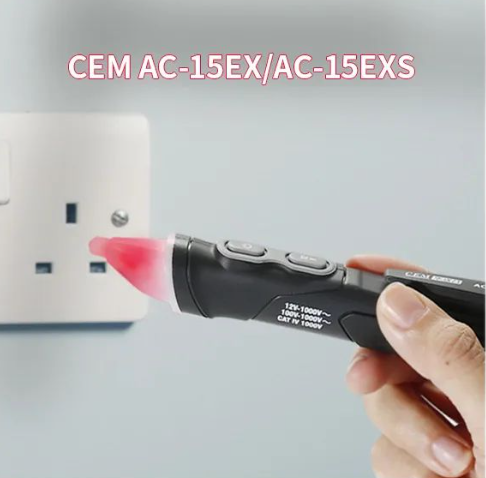
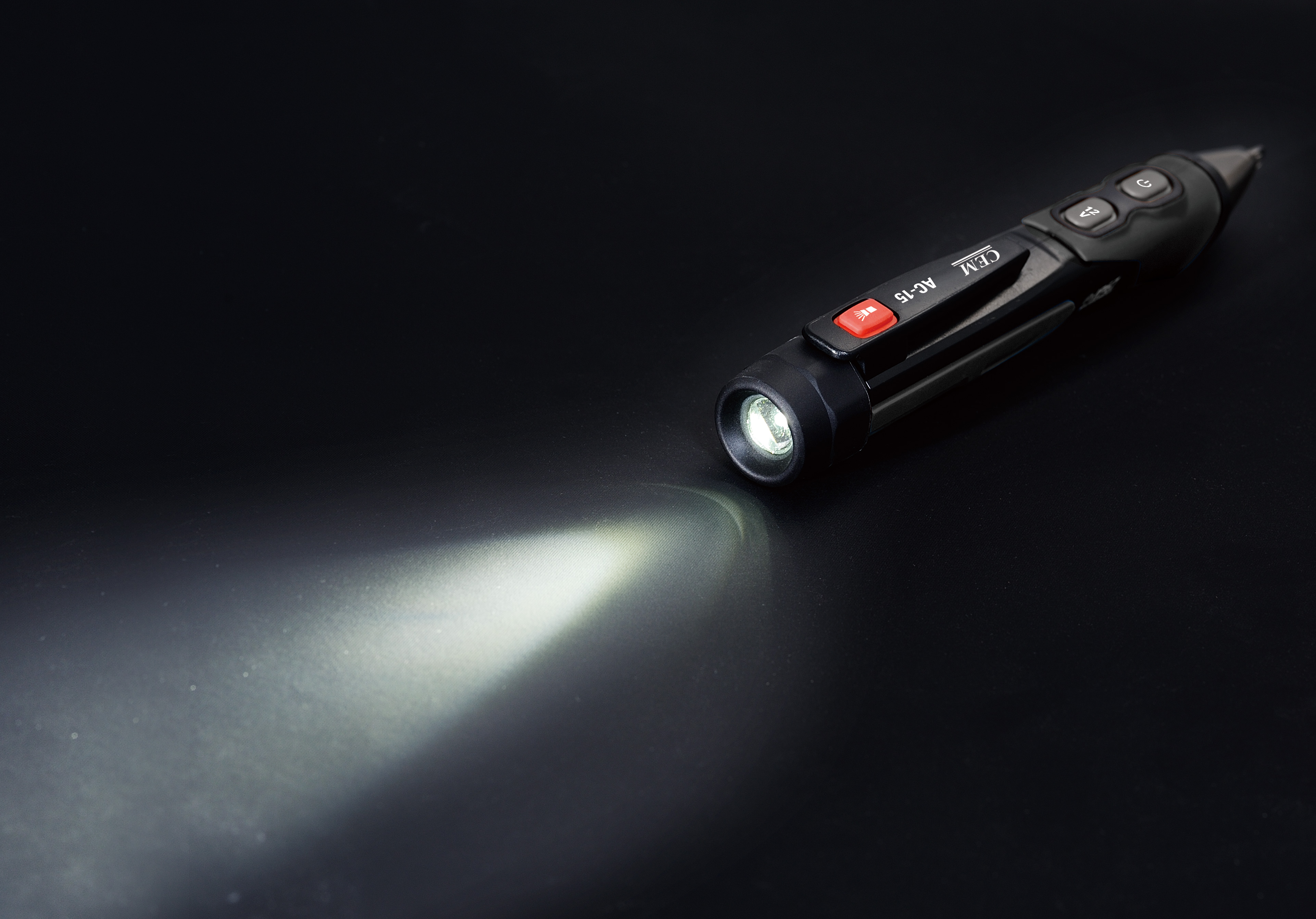
Featured Product: CEM AC-15EX / AC-15EXS Explosion-Proof NCV Tester Pen
Looking for a high-performance, field-tested non-contact voltage tester? The CEM AC-15EX / AC-15EXS offers unmatched reliability, durability, and safety.
Key Features:
-
Dual-Mode Detection: Low (12–1000 VAC) and High (100–1000 VAC) voltage ranges
-
CAT IV 1000V Safety Rating
-
Explosion-Proof Certification: II 2 G Ex ib op is IIB T4 Gb
-
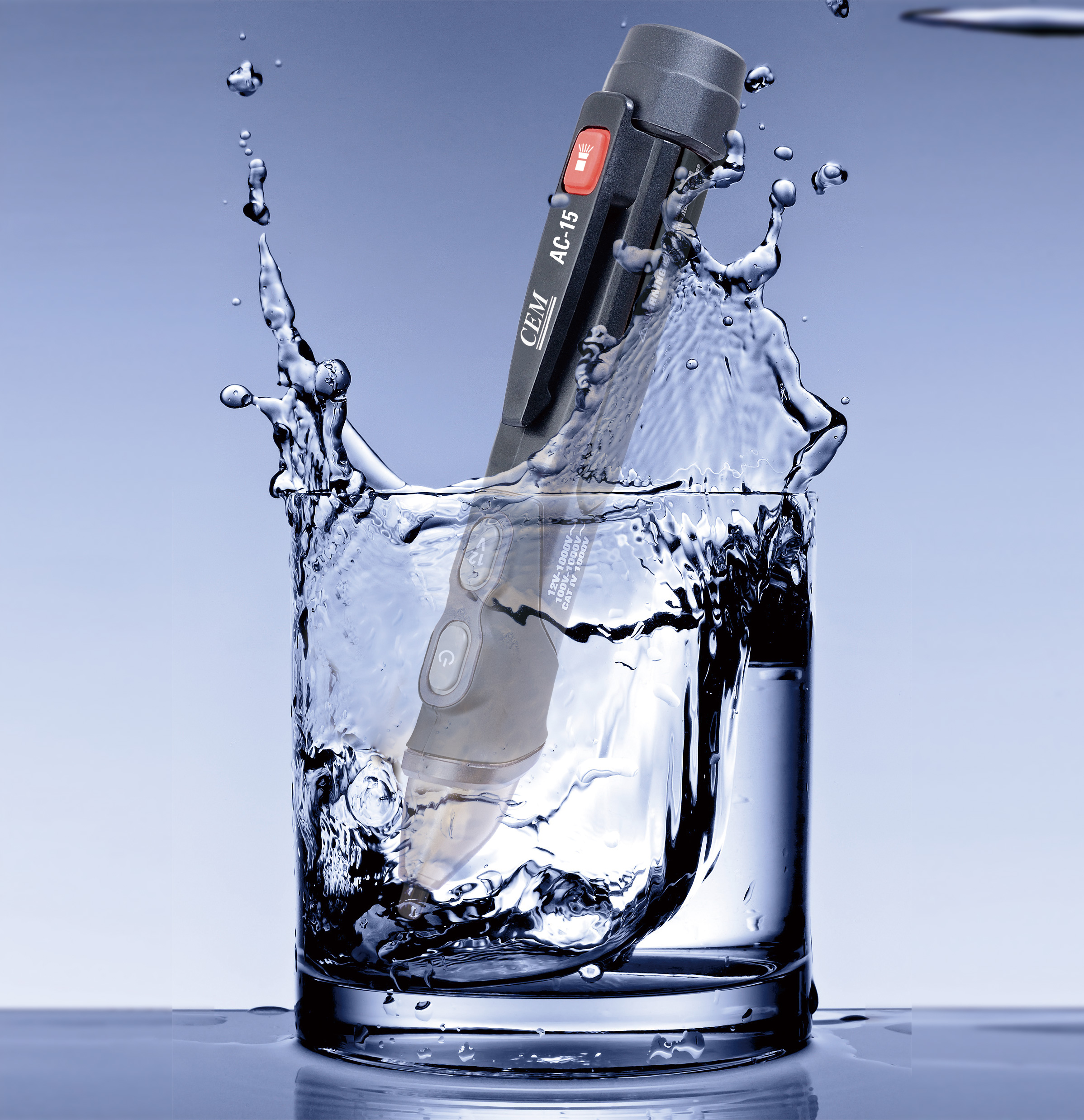
IP67 Rated: Water and dust resistant
-
LED + Buzzer + Vibration Alerts: Adjustable based on voltage strength
-
Built-In Flashlight: Works in low-light environments
-
Silent Mode + Auto Shutdown
-
Vibration Function (AC-15EXS Model)
Applications:
-
Household electrical troubleshooting
-
Industrial electrical inspections
-
Petrochemical and pharmaceutical environments
-
Maintenance in explosion-prone zones
Why Choose a Non-Contact Voltage Tester?
Non-contact voltage detection is now an essential part of safe electrical diagnostics. With tools like the CEM AC-15EX series, technicians can:
-
Quickly pinpoint live circuits
-
Avoid unnecessary wire stripping
-
Safely work in high-risk environments
-
Enhance efficiency in routine checks and repairs
Final Thoughts
In today’s fast-paced industrial and domestic electrical environments, efficiency, accuracy, and safety are paramount. The NCV voltage tester pen exemplifies how modern tools can transform routine diagnostics into smart, secure, and streamlined operations.
Whether you're a professional electrician or a facility manager, investing in a reliable NCV tester like the CEM AC-15EX can dramatically reduce risks, improve workflow, and ensure consistent performance across all electrical maintenance tasks.
CEM Instruments offers cutting-edge diagnostic tools trusted by professionals worldwide. Explore our full range of voltage testers and bring smart safety to your toolkit.
Comment